5 Best Underwater Dive Lights: 5 Expert Picks Compared (2026)
Find the best underwater dive light for night dives, caves and photography. We compare five options by output, runtime, waterproof rating and fit.
 By scubawomen editorial team
Updated November 7, 2026

 By Violet Wallace
As an Amazon Associate I earn from qualifying purchases. This page may contain affiliate links.
Choosing the best underwater dive light comes down to how you dive. A night wreck dive, a cave penetration and a macro photography session each ask for something different. This guide compares five lights from different use cases, so you can match brightness, runtime and build to the dives you actually do. The criteria we used are published specifications, the reputation of each brand, and patterns that owners tend to mention in their feedback, including battery behavior, beam shape and how the housing handles repeated use. Lumen figures on dive lights are often measured under different conditions, so treat them as a rough guide and check the beam and runtime details before you buy.
Our Top Picks
Quick Comparison
| Product | Best for | Key feature |
|---|---|---|
| WINDFIRE Dive Light Scuba Diving Flashlight Bright Underwater Flashlight | Recreational divers and snorkelers on night dives | Simple 3-mode control with a power indicator |
| Wurkkos DL30 Dive Light Rechargeable, 3600 Lumens Bright Scuba Diving Light | Divers who want high output for night and cave dives | High-output rechargeable design with 100m waterproof rating |
| Dive Light LetonPower Underwater Flashlight 8000Lumens Underwater Video Lights 80m Scuba Dive Light | Divers who also shoot video in dark water | Very high stated output with a video-oriented setup |
| Underwater Kinetics C8 eLED (L2) Dive Light, Safety Yellow | Divers who want a dependable, all-round primary or backup light | Established brand with a high-visibility yellow housing |
| Suptig Underwater Lights Dive Light 84 LED High Power Dimmable Waterproof LED Video Light | Underwater photographers and video shooters | Dimmable 84-LED array for lighting subjects |
WINDFIRE Dive Light Scuba Diving Flashlight Bright Underwater Flashlight
WINDFIRE Dive Light Scuba Diving Flashlight Bright Underwater Flashlight | 3 Modes, Power Indicator, IPX8 Waterproof, Built-in Battery Non-detachable, Long-lasting, Night Diving & Snorkeling
This light suits recreational divers and snorkelers who mostly want a reliable light for night dives, shore entries and checking gear in dim water. Its straightforward mode setup makes it a good first dive light.
Key specs
- 3 modes
- Power indicator
- IPX8 waterproof rating
- Built-in, non-detachable battery
Pros
- Simple three-mode control is easy to use with gloves on.
- The power indicator helps you judge remaining charge before a dive.
- IPX8 rating covers typical recreational depths.
Cons
- The non-detachable battery means the whole unit must be charged or replaced.
- Output is modest for deep or technical penetration work.
Wurkkos DL30 Dive Light Rechargeable, 3600 Lumens Bright Scuba Diving Light

Wurkkos DL30 Dive Light Rechargeable, 3600 Lumens Bright Scuba Diving Light | IPX-8 Waterproof Flashlight, 3 Modes, 100m Underwater Lights for Night Diving Cave Snorkeling Submersible Safety Lights
This is a fit for divers who want a bright primary light for night diving, wrecks and overhead environments where visibility matters. It is a sensible step up if you find smaller lights wash out in murky water.
Key specs
- Rechargeable
- 3600 lumens (as listed)
- 3 modes
- IPX-8 waterproof rating, 100m (as listed)
Pros
- High listed output suits night and cave dives.
- Rechargeable operation avoids constant battery purchases.
- Three modes allow you to conserve runtime on long dives.
Cons
- High output drains the battery quickly, so the lower modes are important.
- Lumen figures vary by measurement method, so compare beam pattern as well as the number.
Dive Light LetonPower Underwater Flashlight 8000Lumens Underwater Video Lights 80m Scuba Dive Light

Dive Light LetonPower Underwater Flashlight 8000Lumens Underwater Video Lights 80m Scuba Dive Light Diving Flashlight for Under Water Sports,Underwater Video Shooting and Photography
This light is aimed at divers who want strong light for both viewing and filming in dark conditions, such as night dives with a camera or video work in low-visibility water. Its stated output is high, so it is best for divers who need a lot of light at distance.
Key specs
- 8000 lumens (as listed)
- 80m rating (as listed)
- Designed for underwater video and photography
Pros
- Very high stated output for reaching far subjects.
- Marketed for video use, which suits divers who film.
- Useful as a powerful backup or a primary light for deep night work.
Cons
- Stated lumen figures on lights at this level are hard to verify, so check independent beam data before relying on them.
- Heavy output means shorter runtime at full power, and it can backscatter in particulate water.
Underwater Kinetics C8 eLED (L2) Dive Light, Safety Yellow

Underwater Kinetics C8 eLED (L2) Dive Light, Safety Yellow
This is a practical choice for divers who want a dependable, well-known brand as a primary or backup light. The yellow housing makes it easy to spot in a dive bag or on a boat, which many divers value for safety.
Key specs
- eLED (L2) model
- Safety yellow housing
- Established dive-light brand
Pros
- Brand has a long track record in dive lighting.
- High-visibility yellow makes the light easy to find.
- Suits a dependable everyday backup or primary role.
Cons
- Output is less than the high-lumen models on this list, so it is less suited to deep or cave work.
- Specific runtime and beam figures should be confirmed on the product page.
Suptig Underwater Lights Dive Light 84 LED High Power Dimmable Waterproof LED Video Light
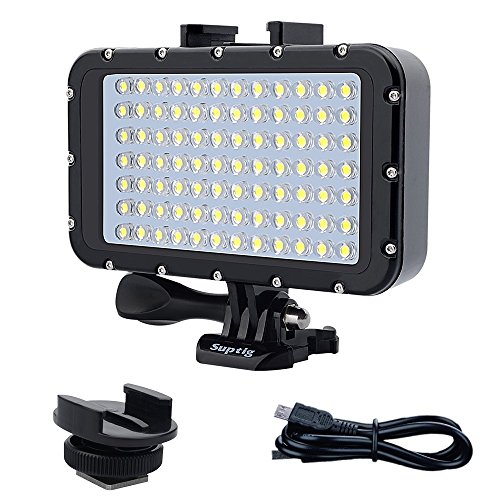
Suptig Underwater Lights Dive Light 84 LED High Power Dimmable Waterproof LED Video Light Waterproof 164ft(50m) Camera Light for Gopro Canon Nikon Pentax Panasonic Sony Samsung SLR Cameras
This light is built around lighting subjects rather than just lighting the way. It fits underwater photographers and video shooters who need soft, adjustable fill light for close-up and macro work, rather than a single narrow beam.
Key specs
- 84 LED array
- Dimmable output
- Waterproof rating, 50m (164ft) as listed
Pros
- Dimming lets you balance light against ambient color and avoid backscatter.
- LED array spreads light evenly across a subject.
- Suits a range of camera systems as listed.
Cons
- Not designed as a general-purpose wayfinding light, so it is a poor primary light for navigation.
- Its 50m rating is shallower than some other picks, so check it against the depths you dive.
Buying Guide
A good underwater light balances brightness, runtime, beam shape and build quality. Start by deciding what you need the light to do, then check the specifications that support that job.
Selection criteria
- Use case: Navigation and night diving need a bright, wide beam. Photography and video need dimmable, even light.
- Depth rating: Check the waterproof rating against the deepest dive you plan. IPX8 is a common standard for submersible lights, but the stated depth matters more than the code alone.
- Runtime: Look for the runtime at the mode you will actually use, not only at the lowest setting.
- Visibility: Bright colors and clear housings help you see and be seen.
Important features
- Beam pattern: A focused spot reaches far but leaves gaps. A wider flood lights the area around you better.
- Modes: A low mode for conserving power and a high mode for active work are the minimum most divers want.
- Power indicator: A visible indicator helps you judge charge before a dive.
- Battery type: Rechargeable lights are convenient. Removable batteries let you carry spares.
Specs to check
- Lumen output, noting that figures are often measured differently across brands.
- Runtime at each mode.
- Waterproof rating and stated maximum depth.
- Housing material and the type of O-ring seal.
- Mounting options and compatibility with your dive mask or wrist.
Choosing by need
- Recreational and night diving: A simple, bright, reliable light with clear modes works well.
- Cave and wreck diving: Prioritize high output, long runtime and a dependable backup light.
- Underwater photography and video: Choose dimmable, evenly distributed light that you can position away from the lens.
Things to watch out for
- Lumen claims that look high without a beam description. Brightness at distance is what matters.
- Waterproof ratings that do not match the depths you dive.
- Batteries that drain quickly at full power, which can leave you in the dark mid-dive.
- Seals that are not checked and lubricated, a common cause of flooding.
For diving-specific safety guidance, including backup lighting for night and cave dives, consult your dive instructor or a qualified professional.
FAQ
How many lumens do I need for a dive light?
For recreational night dives, a light in the hundreds of lumens is often enough to see your buddy and your surroundings. Cave and deep wreck work usually calls for much more, along with a backup. Because lumen figures are measured differently across brands, compare beam data and independent reviews where available.
Do I need a backup dive light?
Yes, for night diving and any overhead environment, a backup light is standard practice. Carry a second light that is independent of the first, so a single failure does not leave you in darkness.
What waterproof rating should a dive light have?
IPX8 is a common rating for submersible lights, but check the stated maximum depth as well. Choose a rating that exceeds the deepest dive you plan.
Is a rechargeable dive light better than a battery-powered one?
Rechargeable lights are convenient and reduce ongoing battery costs, but removable batteries let you swap in fresh power on a long trip. Choose based on how you travel and how long your dives run.
Can I use a dive light for underwater photography?
A dimmable light with an even spread works better for photography than a narrow, high-output beam. Position the light to the side of the camera to reduce backscatter from particles in the water.
How do I maintain a dive light?
Rinse the light in fresh water after every dive, inspect and lubricate O-rings as the manufacturer directs, and keep the battery charged and stored as recommended. Check seals before each dive, especially after storage.
Conclusion
The best underwater dive light depends on the dives you do. For recreational night diving, the WINDFIRE light offers simple controls and a power indicator. For higher-output night and cave work, the Wurkkos DL30 and the LetonPower light are the brighter options, though their stated figures should be confirmed against independent data. The Underwater Kinetics C8 suits divers who value a well-known brand and a highly visible housing as a primary or backup. The Suptig light is the choice for underwater photographers and video shooters who need dimmable, even fill light. Match the light to your primary dive type, carry a backup, and confirm the depth rating before every trip.
Related reading
- Dive Light with Camera: 5 Best Picks for Underwater Video (2026)
- Dive Mask with Light: 7 Best Picks for Night and Hands-Free Diving (2026)
- Dive Light for Night Diving: 7 Best Picks for Divers (2026)

About Violet Wallace
Violet writes about scuba gear for women. Each guide starts with research into how products are built and what owners report after months of use, and is revised when better options appear.
About the author

scubawomen editorial team writes reviews and buying guides for Scuba Women.