Dive Mask Optical Inserts Compared: 3 Best Picks for Clear Vision (2026)
Compare 3 dive mask optical inserts for clear underwater vision. See fit notes, key specs, pros and cons for each lens insert before you buy.
 By Ethan Brooks
Updated November 9, 2026
 By Ethan Brooks
Updated November 2026
Dive mask optical inserts are the most practical way for many divers to see clearly underwater without giving up a well-fitting mask. If you are nearsighted, farsighted or need a frame for a specific mask style, the right insert depends on your prescription, your mask type and how much you want to spend on a one-time setup. The three picks below were chosen by comparing manufacturer specifications, brand reputation for optical accuracy, and the kinds of feedback owners tend to report about fit, clarity and durability. We did not test these products ourselves, so treat the specs as manufacturer claims and check them against your own prescription.
Our top picks at a glance
- 1TOP CHOICEBest overallG2RISE Nearsighted Lens Inserts for Snorkel & Dive Masks, Fixed DiopteView on Amazon
- 2
 Best for custom prescriptions199EB Scuba Spec Prescription Lens Insert for Dive and Snorkeling MasksView on Amazon
- 3
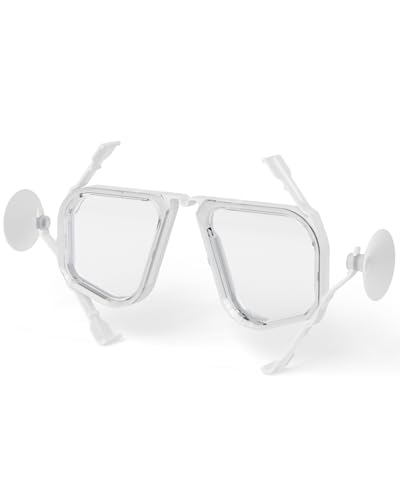
 Best for full face snorkel masksUniversal RX Insert Frame for Full Face Snorkeling Masks (Frame Only)View on Amazon
Our Top Picks
Quick Comparison
| Product | Best for | Key feature |
|---|---|---|
| G2RISE Nearsighted Lens Inserts | Nearsighted divers who want a fixed diopter | Fixed diopter range from -1.5 to -6.0 |
| 199EB Scuba Spec Prescription Lens Insert | Divers with a custom prescription | Prescription lens insert for dive and snorkel masks |
| Universal RX Insert Frame | Owners of full face snorkel masks | Frame-only insert designed for full face masks |
G2RISE Nearsighted Lens Inserts for Snorkel & Dive Masks, Fixed Diopter Myopia Lens for Snorkel Masks (-1.5 to -6.0)
G2RISE Nearsighted Lens Inserts for Snorkel & Dive Masks, Fixed Diopter Myopia Lens for Snorkel Masks (-1.5 to -6.0)
Best for: Nearsighted divers who want a fixed diopter without a custom lab order
This insert suits people whose prescription falls within the listed range and who are comfortable picking a diopter from a set of fixed strengths. It is a sensible starting point when you want to see the reef clearly and do not need astigmatism or bifocal correction.
Key specs
- Fixed diopter range listed as -1.5 to -6.0 (myopia correction)
- Designed for snorkel and dive masks, per the listing name
- Sold as a lens insert rather than a full mask
Pros
- Clear correction for common nearsighted prescriptions within the stated range
- No custom lab order required, so setup is quicker
- Works as a clip-in or insert style solution for compatible masks
Cons
- Fixed diopters cannot match every prescription exactly, which can leave slight blur for some users
- Not suited to astigmatism or bifocal needs
Bottom line: A good choice for nearsighted divers whose prescription sits inside the listed range and who want a quick, budget-conscious way to see clearly underwater.
View on Amazon199EB Scuba Spec Prescription Lens Insert for Dive and Snorkeling Masks
199EB Scuba Spec Prescription Lens Insert for Dive and Snorkeling Masks
Best for: Divers with a custom prescription who need a tailored lens
This option is aimed at people whose prescription does not match a standard fixed diopter. Owners who need accuracy beyond a set range generally find a prescription insert more comfortable to use over long dives.
Key specs
- Prescription lens insert designed for dive and snorkeling masks
- Requires your current prescription for ordering
Pros
- Built around your own prescription rather than a fixed range
- Suitable for dive and snorkeling mask use, per the listing
- Helpful when a standard diopter leaves you with blurred edges
Cons
- Requires an accurate, current prescription and a few days of lead time for the custom order
- Fit and alignment depend on your mask, so check compatibility before ordering
Bottom line: The better pick for divers who need an exact prescription, especially those with astigmatism or a prescription outside standard fixed ranges.
View on AmazonUniversal RX Insert Frame for Full Face Snorkeling Masks (Frame Only)
Universal RX Insert Frame for Full Face Snorkeling Masks (Frame Only)
Best for: Owners of full face snorkel masks who need a prescription frame
This product is a frame only, so you will need your own lenses cut to fit. It suits snorkelers using a full face mask who already have a lens supplier or optician willing to work with a standard insert frame.
Key specs
- Universal insert frame listed for full face snorkeling masks
- Frame only; lenses are not included
Pros
- Lets you use your own prescription lenses in a full face mask
- Universal design is listed as fitting multiple full face mask models
- Useful for snorkelers who want to keep their mask unchanged
Cons
- Lenses must be sourced and fitted separately, adding steps and time
- Universal fit can vary between mask brands, so confirm compatibility first
Bottom line: The right choice for full face snorkel mask owners who are prepared to source lenses separately and confirm fit before buying.
View on AmazonBuying Guide
Prescription type and range
Start with your prescription. Nearsightedness (myopia) and farsightedness (hyperopia) are the most common corrections, and astigmatism adds a cylinder value on top. Fixed diopter inserts usually cover only part of the range, so check the stated limits before ordering. If your numbers fall outside the listed range or include astigmatism, a custom prescription insert is usually more accurate.
Good picks for this: G2RISE Nearsighted Lens Inserts, 199EB Scuba Spec Prescription Lens Insert
Mask compatibility
Inserts are not one-size-fits-all. Measure your mask lens opening and note whether it is a standard two-window mask, a frameless design or a full face mask. Many products list the mask types they support. Confirm compatibility before buying, because a slightly wrong frame can cause leaks or shift the optical center.
Good picks for this: Universal RX Insert Frame for Full Face Snorkeling Masks, 199EB Scuba Spec Prescription Lens Insert
Optical accuracy and centering
Clear vision depends on the optical center sitting in front of your pupils. A lens that is off-center can cause distortion at the edges. Look for products that describe their lens centering or that are made to order from your prescription. If you are unsure about centering, ask an optician who fits dive masks for help.
Good picks for this: 199EB Scuba Spec Prescription Lens Insert, G2RISE Nearsighted Lens Inserts
Fit and seal
An insert changes how the mask sits on your face. After installing, test the seal by inhaling gently through your nose with the mask on. If the mask holds without air leaking, the fit is working. Repeat the test after adding any new lens, since a thicker or heavier insert can change the seal.
Good picks for this: G2RISE Nearsighted Lens Inserts, Universal RX Insert Frame for Full Face Snorkeling Masks
Use case: snorkeling or scuba
Snorkeling usually means shallower water and short sessions, so a fixed diopter may be enough for many people. Scuba diving brings greater depth, longer exposure and more pressure changes on the mask, so a precise prescription and a secure fit matter more. Consider where and how long you dive before choosing.
Good picks for this: G2RISE Nearsighted Lens Inserts, 199EB Scuba Spec Prescription Lens Insert
Durability and materials
Dive inserts are exposed to salt, sunscreen, rinsing and storage in hot cars. Check whether the listing describes the lens material and frame. Rinse your insert in fresh water after every dive, store it in a case and avoid touching the lens surface with bare fingers. Replace an insert that shows scratches or clouding, since these reduce clarity.
Good picks for this: 199EB Scuba Spec Prescription Lens Insert, Universal RX Insert Frame for Full Face Snorkeling Masks
Care and maintenance
Clean the lens with mild soap and fresh water, then dry it with a soft cloth. Avoid abrasive pads, which scratch optical surfaces. Apply an anti-fog product sparingly to the inner lens, following the product directions. Store the mask with the insert in place only if the manufacturer says it is safe to do so.
Good picks for this: G2RISE Nearsighted Lens Inserts, 199EB Scuba Spec Prescription Lens Insert
FAQ
Are dive mask optical inserts the same as prescription masks?
Not exactly. A prescription mask has corrective lenses built into the mask itself. An optical insert is a lens or frame that sits inside an existing mask, which can be cheaper and easier to replace. Both give clear vision when the prescription and fit are correct.
How do I know which diopter to buy?
Use the prescription from your eye doctor. If you are nearsighted, look for a negative number (for example, -3.00). Choose a fixed diopter close to that value, or order a custom insert if your prescription is outside the listed range or includes astigmatism.
Can I use an insert with any dive mask?
Often not. Compatibility depends on the lens shape, size and how the frame clips or seals. Measure your mask opening and check each product listing for supported mask types before ordering.
Will an insert affect the seal of my mask?
It can. A thicker or heavier insert may change how the mask sits on your face. Always do a dry seal test by inhaling gently through your nose with the mask on, and check again in shallow water before diving deeper.
Do I need a lens fitter or optician?
For custom prescriptions and frame-only products, a qualified optician can help with centering and fit. Consult an eye care professional before choosing lens strength, especially if you have astigmatism, changing vision or other eye conditions.
How long do dive mask inserts last?
Lifespan depends on care and use. Scratches, clouding or a loose frame are signs it is time to replace the insert. Rinsing after each dive and storing the mask in a protective case extends its life.
Can I wear contacts instead of an insert?
Some divers use soft contact lenses under a standard mask, though many dive professionals advise against this for safety reasons because lenses can dislodge or cause discomfort. Talk to your eye care provider and dive instructor before relying on contacts.
Conclusion
For most nearsighted divers whose prescription falls inside a fixed range, the G2RISE Nearsighted Lens Inserts is a practical starting point. If your prescription includes astigmatism or sits outside standard values, the 199EB Scuba Spec Prescription Lens Insert is the better fit because it is built around your numbers. Owners of full face snorkel masks should consider the Universal RX Insert Frame, provided they can source lenses separately and confirm compatibility with their mask. Whichever you choose, verify your prescription, check fit with a seal test and clean the insert after every use.
Sources
- Background on refractive errors such as myopia, hyperopia and astigmatism (nih.gov)
- General guidance on eye health and when to see an eye care professional (cdc.gov)
- Workplace guidance on protective eyewear and fit, useful for understanding lens and frame safety principles (osha.gov)
Related reading
- Dive Mask Bifocal Inserts: How to Choose and Fit Them (2026)
- Tilos Universal Dive Mask: 5 Best Picks for Every Fit and Dive Style (2026)
- Synergy 2 TruFit Dive Mask: Fit Check, Pros, Cons and Who It Suits
- Speedo Junior Recreation Dive Mask: How to Pick the Right Fit for Kids (2026)
- Speedo Dive Mask and Snorkel: 3 Best Picks Compared (2026)
About Ethan Brooks
Ethan Brooks is part of our editorial team and reviews and edits our scuba gear for women guides, checking product details against manufacturer specifications and owner feedback.
About the author
Ethan Brooks writes reviews and buying guides for Scuba Women.