Kraken Sports Dive Light Review: Features and Performance
Kraken Sports dive light review: specs, pros and cons, who it suits, and how it compares to the NR-1000 backup. Read before you buy a dive light.
 By Miles Sinclair
Updated November 11, 2026
 By Miles Sinclair
Updated November 2026
The Kraken Sports NR-1800 is a high-output dive light aimed at divers who want a bright primary light for night dives, wreck penetration, and low-visibility work. It is rated at 1800 lumens and a 330-foot depth, and it comes in several color and intensity options. It suits recreational and technical divers who plan to use a main light and want enough output to see clearly in murky water. It is less suited to new divers on shallow, clear-water dives, where a smaller backup light does the job at a lower cost of bulk and handling. Anyone who needs a light for snorkeling or pool use alone should look at something smaller. Check the listing specs against your dive plan before you buy.
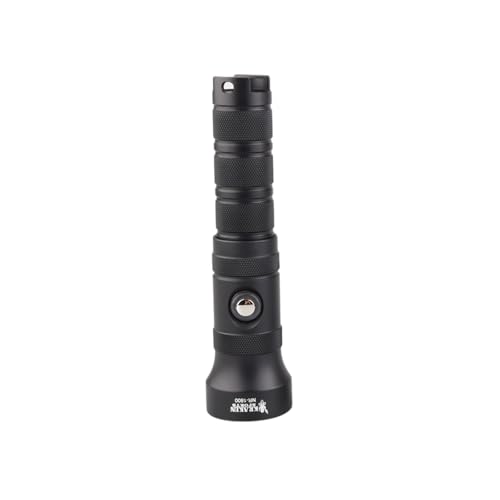
Kraken Sports NR-1800 Dive Light: 1800 Lumens, 330ft Depth Rating, Color Options & Intensity Control, Black
Product Overview
The Kraken Sports NR-1800 is a rechargeable LED dive light built as a primary or main light. Kraken Sports sells it alongside a smaller backup model, the NR-1000, which is covered later in this review. The NR-1800 is designed for divers who need a strong beam for night diving, deeper dives where ambient light drops off, and conditions where visibility is limited by silt, particles, or plankton.
The light is sold in black, with the listing noting color options and intensity control. Intensity control matters on a dive light because most dive-light users want to dial output down during the dive to extend battery life and to avoid reflecting light back into the eyes of a buddy or a marine animal. A light that only runs at full power is less flexible for this kind of work.
Product type context matters here. A primary dive light is meant to be your main source of illumination for a dive. A backup light is a smaller, lower-output light you carry in case the primary fails. Many divers pair a primary with a backup. The NR-1800 sits in the primary category based on its lumen rating. If you are shopping for a backup only, the NR-1000 listing is the better reference.
Key Features & Specifications
The table below lists the specifications stated in the product name and listing title. Where the listing does not state a value, I have left it out rather than guess.
| Feature | Kraken Sports NR-1800 |
|---|---|
| Brightness | 1800 lumens |
| Depth rating | 330 feet |
| Intensity control | Yes, adjustable output |
| Color options | Multiple, black listed |
| Light type | Primary dive light |
| Power source | Rechargeable |
A 330-foot depth rating is well beyond the recreational limit of 130 feet, so the rating gives you margin for deeper technical or deco work where you are still using the light for navigation and signaling. Confirm the exact battery run times with the manufacturer’s specification sheet before you plan a long dive, since run times vary by output setting.
Pros & Cons
Pros
- 1800 lumens gives a strong beam for murky water and night dives.
- Intensity control lets you reduce output to save battery and reduce backscatter.
- 330-foot depth rating covers deeper dives with room to spare.
- Pairs with a smaller backup light from the same brand, which simplifies a two-light setup.
- Rechargeable design avoids the ongoing cost of replacement batteries.
Cons
- At 1800 lumens it is bulkier and heavier than a backup-only light, which matters for travel and for handling underwater.
- Full-power output drains the battery faster, so you need to plan settings around your dive length.
- Full-brightness use in close quarters can cause visibility issues from backscatter, which is common to all high-output dive lights.
- It is a primary light, so it is not a good choice if you only want a small light for shallow, clear-water dives.
Performance Analysis
Because this is a research-based review, the performance discussion below relies on the listed specifications and on patterns commonly reported by owners of high-output dive lights. It is not based on hands-on testing.
The 1800-lumen rating is the headline number. In practice, the usable brightness you see underwater depends on water clarity, your distance from the subject, and the beam angle. In clear water, a light this bright can overexpose nearby objects and create backscatter from suspended particles. In murky water, the extra output helps you see farther. Owners of similar primary lights often report that they run the light at mid or low output most of the time and step up only when they need to pick out detail at distance.
Intensity control is therefore the feature that makes the light practical for a range of conditions. Set it low for close-up work, a macro subject, or a dive with a buddy nearby, and bring it up for a wreck penetration or a search. Battery life follows the same logic. A light that runs at 1800 lumens for the whole dive will not last as long as one you dial down for most of the dive. Plan your dive around the lowest setting that still gives you the view you need.
The 330-foot depth rating is a sensible safety margin. Dive lights are rated for pressure, and a depth rating well beyond your planned depth means the housing is less likely to be stressed at the working depth. Always check the housing seals and O-rings before each dive, rinse the light in fresh water after salt dives, and follow the manufacturer’s care instructions. Seal failure is one of the most common causes of dive-light damage.
Who Should Buy This Product?
The NR-1800 is a good match for:
- Night divers who want a strong primary light for navigation and for finding marine life.
- Divers who regularly dive in murky, silty, or low-visibility water where a weak light is not enough.
- Divers doing deeper recreational or technical dives who want a light with a 330-foot depth margin.
- Divers who plan a two-light setup with a backup, and want a matching primary from the same brand.
You should probably skip it if:
- You mainly dive shallow, clear-water reefs in daylight and only need a light for occasional use.
- You want a small, lightweight light to clip onto a BCD or a wrist mount without adding bulk.
- You are a new diver still building basic buoyancy and trim, and you would rather spend your attention on the dive than on managing light settings.
- You only need a backup. In that case, the smaller NR-1000 is the more sensible choice.
Buying Guide
Before you buy any primary dive light, decide what you will use it for. Start with three questions: how deep do you dive, how clear is your typical water, and how long are your dives? The answers tell you how much output you need, how big a battery you should look for, and whether you need a backup.
A few practical checks help you narrow the field:
- Match output to conditions. Clear tropical water needs far less output than dark, silty, or cave-adjacent water. Choose a light that you can dim, not just one that is bright.
- Check the depth rating against your plan. Look for a rating comfortably beyond the depth you dive, not just at it.
- Confirm the mount and handling. A primary light is usually held in the hand or on a mount. Make sure the handle, clamp, or mount fits your grip and your kit.
- Plan the backup. Most divers carry a second, smaller light in case the primary fails. Buy the backup so it is ready on the same dive.
- Look at the charging and maintenance routine. Know how the light charges, how often you need to rinse it, and what the O-ring care steps are.
If you want a lower-output option, the Kraken Sports NR-1000 Back Up Dive Light is a smaller light in the same family, rated at 1000 lumens and 330 feet, with a listed 90-minute burn time at full power. It works well as the second light in a pair.

Kraken Sports NR-1000 Back Up Dive Light 1000 Lumens, 330ft/100m Depth Rating, 90 Minutes Burn Time at Full Power, Seafoam
For a different primary option with a similar role, the Ikelite Gamma is a well-known dive light that many divers consider when comparing primary lights. You can read a fuller breakdown in the article Ikelite Gamma Dive Light: Features, Setup and Buying Tips for Divers. For a clamp-style primary that many divers use for hands-free work, the Underwater Kinetics line is another established choice. The guide Underwater Kinetics Dive Light: How to Choose and Use One Well covers selection and use.
When you compare any of these, look at the same specs: lumens, depth rating, intensity control, run time at your typical setting, and how the light mounts. Pick the one whose numbers fit your dives, not the one with the largest number on the box.
FAQ
Is the Kraken Sports NR-1800 suitable for night diving?
Yes. Its 1800-lumen rating and adjustable output make it a good fit for night dives where you need to see far and pick out detail. Set the output lower for close work to limit backscatter and to save battery.
What depth can the NR-1800 be used at?
The listing gives a depth rating of 330 feet. That rating is well beyond typical recreational limits. Always use the light within the manufacturer’s stated limits and within your training.
Does it have intensity control?
Yes. The listing includes intensity control, so you can reduce output for close-up work or to extend battery life during a long dive.
How does it compare to the NR-1000?
The NR-1800 is the higher-output primary light, at 1800 lumens. The NR-1000 is rated at 1000 lumens and is meant as a backup. The NR-1800 is bigger and drains faster at full power, so choose based on whether you need a primary or a backup.
Should I carry a backup light with it?
For most dives, yes. A backup light is standard practice in many training programs and in dive planning. A smaller light like the NR-1000 is a common pairing.
How do I care for the light after a salt-water dive?
Rinse the light in fresh water, dry the exterior, and inspect the O-rings and seals. Follow the manufacturer’s care instructions, and do not open the housing in the field. If you are unsure about maintenance, consult the manufacturer or a qualified dive shop.
Is this light a good first dive light?
It depends on your diving. For a new diver on shallow, clear-water dives, a smaller light is usually enough and easier to manage. The NR-1800 makes more sense once you dive at night, in low visibility, or deeper. As always, dive safety depends on training, so consult a qualified instructor about the gear you need for your planned dives.
Final Verdict
The Kraken Sports NR-1800 is a capable primary dive light for divers who need strong output for night diving, murky water, or deeper dives. Its 1800-lumen rating, adjustable intensity, and 330-foot depth rating give it a practical range, and it pairs cleanly with the NR-1000 backup for a two-light setup. Its size, weight, and battery draw at full power are the trade-offs. If your diving is shallow, clear, and daytime, a smaller light will serve you better and be easier to handle.
View on AmazonRelated reading
- Wrist Mounted Dive Light: 7 Tips for Choosing and Using One Safely
- What Is a Water Activated Dive Marker Light and How Does It Work?
- What Is a Sea Life Dive Light and Do You Need One?
- What Is a Glo Toob Dive Light and Is It Worth Using?
About Miles Sinclair
Miles Sinclair is part of our editorial team and reviews and edits our scuba gear for women guides, checking product details against manufacturer specifications and owner feedback.
About the author
Miles Sinclair writes reviews and buying guides for Scuba Women.