6 Best Most Reliable Scuba Regulator Picks for Divers (2026)
Find the most reliable scuba regulator for your diving style. We compare six models on cold-water performance, service life and breathing comfort.
 By Lauren Holland
Updated November 20, 2026
 By Lauren Holland
Updated November 2026
Choosing the most reliable scuba regulator comes down to a few things: how well it breathes at depth, how it handles cold water, how easy it is to service, and whether the parts hold up over years of rinsing and storage. The six regulators below were selected from manufacturer specifications, brand reputation and common owner feedback about durability and performance. Each has a clear strength, so the right choice depends on your diving.
Our top picks at a glance For another angle, check out Most Important Feature of a Scuba Regulator (2026): Which Should You Choose?.
- 1TOP CHOICEBest overallSCUBAPRO MK25 EVO/S620Ti Dive Regulator SystemView on Amazon
- 2
 TOP CHOICEBest for travelMares Dual ADJ 62X Scuba Diving RegulatorView on Amazon
- 3
 TOP CHOICEBest for a backup second stageMares Octopus Dual Second Stage RegulatorView on Amazon
- 4
 Best budget backup octopusScuba Choice 350PSI Low Pressure Regulator Octopus 2nd StageView on Amazon
- 5
 Best for comfortable breathingScubapro C370 Second Stage RegulatorView on Amazon
- 6
 Best for port maintenanceheyous First Stage Port Plug KitView on Amazon
Our Top Picks
Quick Comparison
| Product | Best for | Key feature |
|---|---|---|
| SCUBAPRO MK25 EVO/S620Ti | Overall reliability | Balanced first stage |
| Mares Dual ADJ 62X | Travel and light kits | Compact, lightweight build |
| Mares Octopus Dual Second Stage | Backup air source | Superflex low-pressure hose |
| Scuba Choice 350PSI Octopus | Budget backup | 22-inch LP hose |
| Scubapro C370 Second Stage | Easy breathing | Smooth, low-effort airflow |
| heyous Port Plug Kit | Port maintenance | Stainless steel leak-proof plugs |
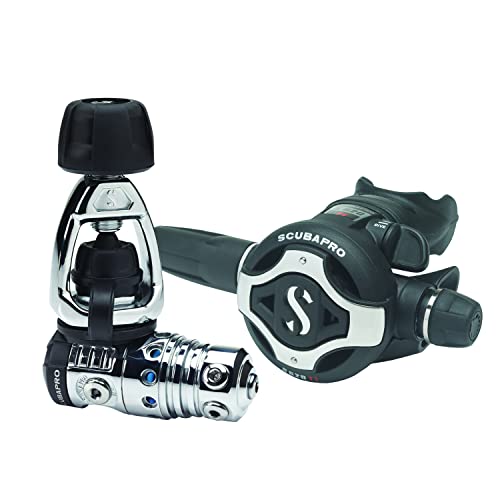
SCUBAPRO MK25 EVO/S620Ti Dive Regulator System
SCUBAPRO MK25 EVO/S620Ti Dive Regulator System for Scuba Diving, INT
Best for: Divers who want a long-serving primary regulator for recreational and technical diving.
This is a well-known first and second stage pairing from a major manufacturer. It suits divers who plan to keep one regulator for many years and service it on schedule.
Pros
- Balanced first stage that holds steady output across changing tank pressure
- Widely supported with parts and service available
Cons
- Heavier than the compact travel options
Mares Dual ADJ 62X Scuba Diving Regulator
Mares Dual ADJ 62X Scuba Diving Regulator – Durable Lightweight Compact First & Second Stage Regulator for Scuba Divers – 416278, White/Aqua, INT
Best for: Travel divers and anyone who wants a compact primary regulator.
The lighter, smaller body makes this easier to pack for trips where luggage space is limited. It fits well with a travel-focused kit.
Pros
- Compact and lightweight for packing
- Adjustable settings for different dive conditions
Cons
- Owners often recommend rinsing carefully after saltwater dives
Mares Octopus Dual Second Stage Regulator
Mares Octopus Dual Second Stage Regulator – Ultralight Scuba Diving Regulator w/VAD System, Superflex Hose for Reliable & Easy Breathing
Best for: Divers who need a dependable backup air source.
An octopus is only useful if it works when you need it, so a stable second stage with a flexible hose is the priority here.
Pros
- Superflex hose resists kinking during buddy breathing
- Ultralight design adds little bulk
Cons
- Priced at the premium end of backup options
Scuba Choice 350PSI Low Pressure Regulator Octopus 2nd Stage
Scuba Choice 350PSI Low Pressure Regulator Octopus 2nd Stage with 22" LP Hose – Durable, High-Performance Diving Octopus, Safe & Reliable Backup for Divers
Best for: Divers who want a budget backup octopus for recreational dives.
This is a straightforward backup second stage with a long low-pressure hose, useful for buddy sharing in shallow water.
Pros
- Budget-friendly backup choice
- 22-inch low-pressure hose gives comfortable reach
Cons
- Fewer adjustment options than premium models
Scubapro C370 Second Stage Regulator
Scubapro C370 Second Stage Regulator
Best for: Divers who prioritize effortless breathing during longer dives.
A second stage designed for low breathing effort suits divers who want to conserve air and reduce fatigue on deeper or longer dives.
Pros
- Smooth, low-effort airflow
- Strong brand support for parts and service
Cons
- Requires a compatible first stage for the best match
heyous First Stage Port Plug Kit
heyous First Stage 7/16" Stainless Steel Scuba Diving Regulator High Pressure Port Plug and 3/8" Stainless Steel Scuba Diving Regulator Low Pressure Port Plug Kit with Leak-Proof O-Ring
Best for: Divers who want to seal unused ports on a first stage.
Unused ports must be sealed to keep water out and maintain proper pressure. This kit covers both high-pressure and low-pressure sizes.
Pros
- Stainless steel plugs with leak-proof O-rings
- Covers both high-pressure and low-pressure port sizes
Cons
- Not a regulator itself, so it complements rather than replaces one
Buying Guide
Breathing Performance at Depth
A reliable regulator should deliver air smoothly whether you are shallow or deep, and whether you are breathing calmly or working hard. Look for a design with good airflow and a second stage that does not free-flow or require much effort to inhale from. Testing is best done in a dive shop before you commit.
Cold Water Suitability
If you dive in cold water, check whether the first stage is designed to resist freezing and whether it has a balanced or environmentally sealed design. Regulators built for temperate and cold conditions tend to hold up better when water temperatures drop and air expands quickly through the first stage.
Ease of Servicing and Parts Availability
Every regulator needs periodic servicing, so choose a model from a brand with widely available parts and certified technicians. A regulator that is easy to maintain and has a strong service network will usually stay reliable for many more years than one that is hard to repair.
Build Quality and Materials
Corrosion-resistant materials such as chrome-plated brass, stainless steel and high-grade polymers help a regulator survive saltwater rinsing and years of storage. Check hoses for flexibility and durability, and make sure the mouthpiece and purge button feel solid and comfortable.
Configuration and Use Case
Consider whether you need a single regulator for recreational diving, a backup second stage for safety, or a compact setup for travel. Matching the configuration to how and where you dive will do more for your reliability than any single feature.
FAQ
How often should a scuba regulator be serviced?
Most manufacturers and dive professionals recommend a full service about once a year or every 100 to 200 dives, whichever comes first. Regular servicing keeps seals, valves and springs working properly and catches small problems before they become failures.
Do I really need a backup second stage?
A backup second stage, often called an octopus, is a useful safety tool because it gives a buddy or yourself a second air source if the primary regulator fails. Many divers consider it a standard part of their gear, especially for dives beyond shallow recreational depths.
Can I use a travel regulator for all types of diving?
Compact travel regulators are convenient and light, but they are usually best suited to recreational diving in mild conditions. For cold water or demanding dives, a full-size regulator with a larger airflow capacity is generally the better choice.
How should I rinse and store my regulator?
Rinse the regulator in fresh water after every saltwater dive, keeping the dust cap on the first stage and avoiding pressing the purge button under water. Store it in a cool, dry place out of direct sunlight, with hoses loosely coiled rather than kinked.
What is the purpose of a port plug kit?
Port plugs seal unused openings on a first stage so water and debris cannot enter the regulator. They are useful when you are using a first stage with only some ports connected, and they help protect the internal components from damage.
Conclusion
For most recreational divers who want a dependable primary regulator, the SCUBAPRO MK25 EVO/S620Ti is a strong all-around choice, while the Mares Dual ADJ 62X suits divers who need something compact for travel. Those who want an extra layer of safety should look at the Mares Octopus or Scuba Choice backup second stages, and divers who prefer a proven second stage can consider the Scubapro C370.
The heyous port plug kit is a practical accessory rather than a regulator, so it is best for divers who need to seal unused ports on their first stage. Matching your choice to your diving environment, maintenance habits and safety needs will give you the most reliable setup over time.
Related reading
- Most Expensive Scuba Regulator: 5 Top Picks Compared (2026)
- Xs Scuba Argon Regulator: What It Is and When Divers Use One
- Top 5 Scuba BCD and Regulator Packages for Every Diver (2026)
About Lauren Holland
Lauren Holland is part of our editorial team and reviews and edits our scuba gear for women guides, checking product details against manufacturer specifications and owner feedback.
About the author
Lauren Holland writes reviews and buying guides for Scuba Women.