XTAR D26 Dive Light Review: Features and Performance
Xtar D26 dive light review: 2500-lumen output, 100 m rating and what it suits. See who should buy it, who should skip it, and the alternatives worth comparing.
 By Miles Sinclair
Updated November 23, 2026
 By Miles Sinclair
Updated November 2026
The XTAR D26 dive light is a 2500-lumen underwater torch marketed for recreational and technical divers who want a bright primary or backup light rated to 100 meters. It suits divers who regularly dive at night, explore wrecks or caves, or want a single powerful light for low-visibility conditions. It is a weaker fit for divers who only do daytime reef dives in clear water, want a compact light to clip to a BCD D-ring, or need a light they can fully rely on without checking its battery and seal before every dive. Because this review is based on manufacturer listing details and general owner feedback patterns rather than hands-on testing, treat the numbers below as a starting point and confirm current specifications on the product page before you buy.
XTAR D26 2500 Lumens Scuba Dive Light Waterproof Diving Torch Submarine Diving Lights Underwater 100 Meters Cave Wreck Diving Flashlight
Product Overview
The D26 is sold under the XTAR name, a brand known for flashlights and rechargeable lighting. The listing describes it as a scuba diving torch with 2500 lumens, a 100-meter depth rating and a design intended for wreck, cave and deep-sea use. The product type is a handheld, pistol-style or torch-style dive light meant to be held in one hand, with the second hand free for a reel, camera or gear.
Dive lights in this category are generally sold as either primary lights, which are your main source of illumination on a dive, or backup lights, which you carry in case the primary fails. A 2500-lumen light sits toward the bright end of handheld dive lights, which makes it more suited to dark water and low visibility than to casual daytime use. Brightness on paper is only one part of the picture, since beam pattern, battery life and seal integrity matter just as much when you are 30 meters down in a silty wreck.
If you are new to dive lights in general, it helps to understand the difference between beam types before you compare models. The article Wide or Narrow Beam Dive Light: Which Should You Choose? walks through how beam angle changes what you see at different distances, and that choice affects how useful a bright light actually is underwater.
Key Features & Specifications
The table below lists only the specifications that are stated in the product name or are widely associated with this model. Confirm the rest on the live listing.
| Feature | What the listing indicates | What it means for you |
|---|---|---|
| Brightness | 2500 lumens | Strong output for dark water, wrecks and night dives; more than enough for most recreational dives, and useful headroom for low visibility. |
| Depth rating | 100 meters | Covers recreational depths and most technical dive profiles; always verify your planned depth is well inside the rating. |
| Intended use | Scuba diving, wreck, cave and deep-sea diving | Designed for divers who need a primary light in demanding conditions rather than a casual snorkel light. |
| Light type | Handheld torch | Held in one hand; requires a hand free for other tasks. |
Manufacturers in this category typically also list battery type, runtime at each output level, beam angle, switch design and charging method. Check the product page for these details and compare them against the beam angle guidance in Wide or Narrow Beam Dive Light: Which Should You Choose? before deciding. Runtime at the highest setting is usually much shorter than at lower modes, so look for a stated runtime table rather than a single headline figure.
Pros & Cons
Pros
- High 2500-lumen output suits night diving, wreck exploration and turbid water.
- 100-meter depth rating covers typical recreational and many technical dive profiles.
- Torch-style handle keeps the light in one hand and leaves the other free for tasks.
- Brand and listing position it clearly as a dedicated underwater light rather than a repurposed land flashlight.
- Works well as either a primary light or a high-output backup, depending on your setup.
Cons
- At maximum output, runtime is typically short, so you need to plan which mode you use and when.
- A bright light can be a drain on battery and may reduce how long you run it on a long dive.
- Handheld lights need a hand, which is a drawback for divers who prefer to keep both hands free.
- Seal integrity and O-ring care are your responsibility; a single leak can end a dive light’s life.
- Owners often note that the beam is best appreciated in dark conditions, so daytime reef divers may find it more light than they need.
Performance Analysis
Lumen ratings are measured under test conditions that do not match water, so think of the 2500-lumen figure as a relative indicator. In air, a high lumen count can look harsh, but underwater the beam is scattered by suspended particles, and output that looks excessive on land often becomes useful as visibility drops. A rough practical rule is that brighter lights help most in darkness, at depth where ambient light has faded, and in water with plankton or sediment.
Runtime is the performance question most divers should ask first. Dive lights commonly offer several output levels, and the highest level is usually good for minutes rather than hours. A sensible approach is to use a medium or low mode for general navigation and reserve the highest setting for emergencies, signaling or reading gauges in very dark conditions. Plan your dive around the lowest level that gives you comfortable visibility, and carry a backup light sized for the same task.
Owner feedback patterns for high-output torches like this one tend to focus on three things: how well the beam performs in real low-visibility water, how quickly battery levels drop at the top setting, and whether the seal and switch hold up to repeated rinsing and pressure cycles. Consistent, positive experiences usually come from divers who rinse the light in fresh water after every dive, grease O-rings sparingly with the recommended lubricant, and store the light with the battery at a partial charge. Negative experiences more often trace back to seal neglect or running the light on maximum for long periods.
Build quality and waterproofing are the foundation of any dive light’s performance. A 100-meter rating means the housing is designed to withstand that pressure, but real-world reliability depends on regular inspection. Check the O-ring, lens, and battery contacts before every trip, and replace the O-ring on the schedule the manufacturer recommends. If you want more guidance on keeping a dive light in top condition, the article UK C8 Dive Light Batteries: Types, Charging and Safe Use for Divers covers charging habits and battery safety that apply broadly to rechargeable dive lights.
Who Should Buy This Product?
The XTAR D26 makes the most sense for a specific group of divers. If you regularly night dive, dive wrecks or caves, or work in low-visibility water where a bright primary light changes what you can see, its output and depth rating are relevant to your needs. It is also a reasonable choice for an experienced diver who already owns a smaller light and wants a high-output backup that can cover the same job.
You should probably skip it if your diving is mostly shallow, daytime and in clear water. A 2500-lumen light will be more than you need on a sunny reef dive, and you will be paying in runtime and battery management for power you rarely use. Beginners who only do open water certification dives may also find a smaller, lower-output light easier to manage. Finally, if you prefer to keep both hands free, a handheld torch is a poor fit; a wrist-mounted or head-mounted design may suit you better, and the guide Wrist Mounted Dive Light: 7 Tips for Choosing and Using One Safely covers those options.
Buying Guide
Before you buy any dive light, work through a short checklist. Start with your typical dive environment: depth, visibility, time of day and whether you dive wrecks or caves. Then decide whether the light will be your primary or your backup, because that determines how much runtime and brightness you need. Next, check the beam type. A narrow beam reaches farther in dark water, while a wide beam lights up more of your surroundings and is easier for general navigation. Finally, look at battery type and charging method, and make sure you have the charger, spare battery or O-ring kit you will need for your routine.
When comparing alternatives within the same brand family, pay attention to how output, beam angle and runtime trade off against each other. The XTAR D26 sits in a higher-output position, so it is a fit for dark-water work. Other models in the same line are sometimes positioned differently, with changes to brightness, beam pattern or power indicator features. Two well-known alternatives to consider are listed below, each with a direct link to the listing.
- XTAR D26 Scuba Diving Light, 2800 Lumens Super Bright Underwater Flashlight with 7 Degrees Narrow Beam and Power Indicator: a related XTAR model with a narrower beam and a power indicator, which may appeal to divers who want reach over spread and a clearer view of remaining battery.

XTAR D26 Scuba Diving Light, 2800 Lumens Super Bright Underwater Flashlight with 7 Degrees Narrow Beam and Power Indicator,Scuba & Snorkeling Safety Dive Lights for Night Diving
- XTAR D26 1600 Lumen Scuba Diving Flashlight Dive Torch Underwater 100 Meters Submarine Lights for Under Water Deep Sea Cave at Night: a lower-output version of the same family, suited to divers who want a 100-meter light with longer runtime and less glare.
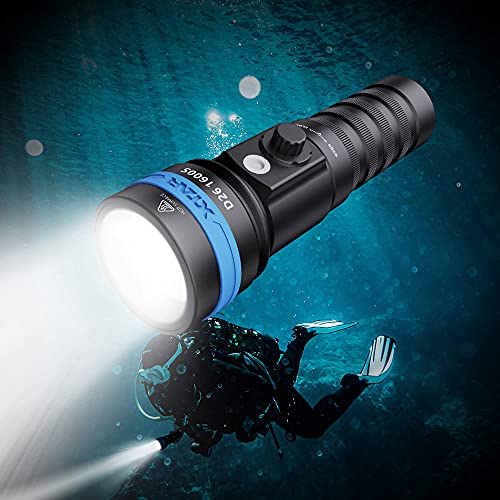
XTAR D26 1600 Lumen Scuba Diving Flashlight Dive Torch Underwater 100 Meters Submarine Lights for Under Water Deep Sea Cave at Night
Whichever model you choose, verify the depth rating, battery runtime and O-ring maintenance requirements on the product page, and consult your certifying agency or an experienced dive professional if you are unsure whether a given light is appropriate for your planned dives.
FAQ
Is the XTAR D26 suitable as a primary dive light?
It can be, particularly for night dives, wreck and cave dives, or low-visibility water. Many divers use a high-output light as primary and a smaller light as backup. Make sure its runtime at the mode you plan to use covers your full dive plus a safety margin.
What does 100 meters depth rating mean for me?
It means the housing is rated to withstand that pressure. Recreational diving rarely goes that deep, so the rating gives a comfortable margin for most dive profiles. Always stay within your training and certification limits regardless of what the light can handle.
How bright does a dive light need to be?
It depends on conditions. Clear, shallow daytime dives need much less light than deep night dives or murky water. Higher lumen ratings help most when ambient light is low, but beam type and visibility matter as much as raw output.
Narrow beam or wide beam: which is better?
A narrow beam reaches farther and works well for spotting objects ahead in dark water. A wide beam lights more of your surroundings and suits general navigation and checking your buddy. Many divers keep both types for different tasks.
How should I care for the light after a dive?
Rinse it in fresh water, dry the exterior, inspect the O-ring and lens for damage or debris, and lubricate the O-ring lightly with the manufacturer-recommended grease. Store the light with the battery at a partial charge rather than fully drained or left at full charge for long periods.
Can I use this light for snorkeling or surface work?
It is designed for underwater diving use. Using a high-output dive light on the surface drains battery quickly, and a smaller, lower-output light is usually more practical for snorkeling or shallow surface tasks.
Should I replace the O-ring regularly?
Yes. O-rings are a common failure point in any dive light. Follow the manufacturer’s replacement schedule, and replace it sooner if you see nicks, flattening or debris. If you are unsure about seal maintenance, ask a dive shop technician to show you the correct method. Consult a professional dive instructor or equipment specialist for guidance specific to your setup.
Where does this light fit in a dive light kit?
Most divers carry a primary light, a backup light and a spare battery or charger. The D26 can fill the primary or high-output role. Balance it with a smaller backup that you can run for the full dive if the main light fails.
Final Verdict
The XTAR D26 is a high-output, 100-meter-rated dive torch that makes most sense for night diving, wreck and cave exploration, and low-visibility work. Its 2500-lumen output and depth rating are its main strengths, while short runtime at maximum output and the need to keep a hand free are its main limitations. If your diving is mostly shallow and in clear water, a smaller light will likely serve you better. If you dive in dark conditions and want a bright primary light, it is worth a close look, provided you commit to regular seal maintenance and battery planning.
View on AmazonRelated reading
- Xtar Dive Light SD2: Specs, Setup and Buying Tips for Divers
- Wurkkos Dive Light Review: Features, Strengths and Who It Suits
- What Is a Water Activated Dive Marker Light and How Does It Work?
- What Is a Sea Life Dive Light and Do You Need One?
About Miles Sinclair
Miles Sinclair is part of our editorial team and reviews and edits our scuba gear for women guides, checking product details against manufacturer specifications and owner feedback.
About the author
Miles Sinclair writes reviews and buying guides for Scuba Women.