Akona Adventure Gear Dive Bag: 6 Best Picks for Divers (2026)
Compare six akona adventure gear dive bag options, from roller and backpack styles to mesh duffels, with fit, use-case and packing notes for divers.
 By Ethan Brooks
Updated November 9, 2026
 By Ethan Brooks
Updated November 2026
Shopping for an akona adventure gear dive bag means balancing capacity, drainage, how you travel and how much your regulator and wetsuit need protection. This list is built on manufacturer specifications, brand reputation and the patterns owners commonly report in reviews, with each pick matched to a specific diving need. We compared mesh versus solid fabric, wheeled versus backpack carry, and how well each bag handles wet gear, flights and boat diving.
Our top picks at a glance
- 1TOP CHOICEBest overallAKONA Caspian DXView on Amazon
- 2
 TOP CHOICEBest for rolling gear through airportsAKONA Chelan Roller BackpackView on Amazon
- 3
 TOP CHOICEBest for boat diving and fast dryingAKONA Azul Mesh Dive Bag BackpackView on Amazon
- 4
 Best for heavy weights and ballastAkona Weight Bag BlackOutView on Amazon
- 5
 Best for snorkel and free dive kitAKONA Free Dive Snorkel BagView on Amazon
- 6
 Best budget pickAKONA Caspian LT Lite Scuba Diving Mesh Duffel Gear BagView on Amazon
Our Top Picks
Quick Comparison
| Product | Best for | Key feature |
|---|---|---|
| AKONA Caspian DX | All-round water sports storage | PVC-coated mesh construction |
| Akona Weight Bag BlackOut | Heavy weights and ballast | Heavy-duty storage for dense gear |
| AKONA Chelan Roller Backpack | Rolling full dive kits through travel | Wheels plus backpack straps, 600D fabric |
| AKONA Free Dive Snorkel Bag | Snorkel and free dive kit | Compact, dedicated smaller-item storage |
| AKONA Azul Mesh Dive Bag Backpack | Boat diving and fast drying | 65L mesh with full zip access |
| AKONA Caspian LT Lite Mesh Duffel | Budget-minded divers | Lightweight mesh duffel |
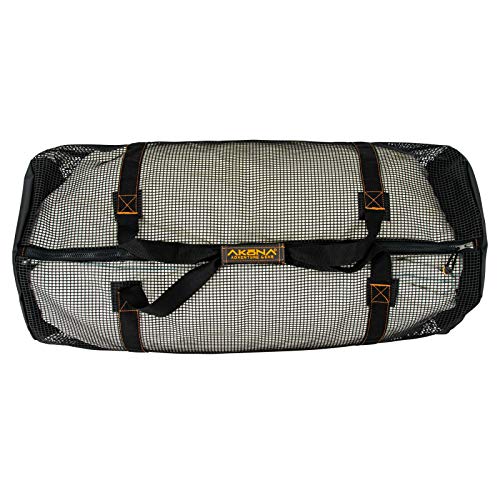
AKONA Caspian DX
AKONA Caspian DX. A deluxe Mesh Duffel Bag with PVC Coated Mesh for all Water Sports Activities
Best for: All-round water sports storage with fast drainage
This deluxe mesh duffel suits divers who rinse gear at the dock and want air to circulate around wet wetsuits and fins. It is a good fit for shore diving and day boat trips where the bag rides in a vehicle trunk.
Key specs
- Deluxe mesh duffel style
- PVC-coated mesh construction
- Designed for water sports activities
Pros
- Mesh lets wet gear drain and dry faster than solid fabric
- Simple duffel design is easy to load and unload
- Suits a wide range of water sports, not just diving
Cons
- No wheels, so heavy loads must be carried
- Mesh offers less protection from sharp objects and dust
Bottom line: A strong first choice for divers who want one versatile bag for dock-side rinsing and vehicle transport.
View on AmazonAkona Weight Bag BlackOut
Akona Weight Bag BlackOut – Heavy-Duty Dive Gear Storage
Best for: Heavy weights and ballast storage
Lead weights and ballast are dense and can damage lighter bags over time. This heavy-duty bag is aimed at divers who need a dedicated, durable home for their weight system between dives.
Key specs
- Heavy-duty construction for weight storage
- Dark BlackOut colorway
Pros
- Built to carry dense weight loads without sagging
- Keeps weights separate from regulators and electronics
- Simple, single-purpose design
Cons
- Single-purpose, so it does not replace a main gear bag
- Heavy when fully loaded
Bottom line: Best as a companion bag for divers who already own a main gear bag and need a dedicated weight carrier.
View on AmazonAKONA Chelan Roller Backpack
AKONA Chelan Roller Backpack – Lightweight Scuba Diving Gear Bag with Wheels, Heavy-Duty 600D Fabric, Multi-Access Storage, Fits Full Dive Equipment Set
Best for: Rolling full dive kits through airports
Travelers who move a full set of gear through terminals and hotel lobbies will value the wheels and backpack straps together. It suits divers flying to resort destinations who want one bag for transit and storage.
Key specs
- Roller with backpack straps
- Heavy-duty 600D fabric
- Multi-access storage for a full dive equipment set
Pros
- Wheels take load off the back on long concourse walks
- Backpack straps help on stairs and uneven ground
- Multiple access points make it easier to reach gear
Cons
- Solid fabric holds moisture longer than mesh
- Wheels add weight to the bag before any gear goes in
Bottom line: The best pick for divers who fly often and want wheels without giving up backpack carry.
View on AmazonAKONA Free Dive Snorkel Bag
AKONA Free Dive Snorkel Bag
Best for: Snorkel and free dive kit
Freedivers and snorkelers carry smaller, delicate items such as masks, snorkels and fins that can be crushed in a large duffel. A dedicated smaller bag keeps this kit organized and separate from heavier scuba gear.
Key specs
- Dedicated snorkel and free dive bag
- Compact footprint for smaller kit
Pros
- Keeps masks and snorkels from being crushed
- Easy to carry as a second bag on boat trips
- Good for organizing a free dive setup
Cons
- Too small to hold a full scuba kit
- Limited specs are published, so check dimensions before buying
Bottom line: A useful secondary bag for freedivers and snorkelers, not a primary scuba gear carrier.
View on AmazonAKONA Azul Mesh Dive Bag Backpack
AKONA Azul Mesh Dive Bag Backpack, 65L Scuba Gear Bag with Full Zip Access | Large mesh backpack for scuba diving and snorkel gear, fins and wetsuit – drains fast and fits under dive boat benches
Best for: Boat diving and fast drying
Boat divers who rinse gear on deck and stow bags under benches will appreciate open mesh construction. The 65-liter capacity fits a wetsuit, fins and regulator set for a day trip or a short liveaboard stay.
Key specs
- 65-liter capacity
- Large mesh backpack design
- Full zip access
- Fits under dive boat benches (per listing)
Pros
- Mesh drains quickly and dries faster than solid bags
- Full zip access makes it simple to reach gear
- Backpack carry frees hands on docks and ladders
Cons
- Mesh does not protect gear from dust or spray
- No wheels, so long walks require carrying the load
Bottom line: The top choice for divers who spend most of their time on boats and want gear to dry quickly between dives.
View on AmazonAKONA Caspian LT Lite Scuba Diving Mesh Duffel Gear Bag
AKONA Caspian LT Lite Scuba Diving Mesh Duffel Gear Bag
Best for: Budget-minded divers
The lighter Caspian design is for divers who want a basic mesh duffel without extra features. It suits occasional divers and anyone storing a second set of gear.
Key specs
- Lightweight mesh duffel construction
- Designed for scuba diving gear
Pros
- Lighter empty weight than heavier duffels
- Mesh drains and dries quickly
- Simple design is easy to pack
Cons
- Lighter build may not suit very heavy loads
- Fewer organizational features than deluxe models
Bottom line: A sensible option for divers who need a basic, lightweight mesh bag without extra features.
View on AmazonBuying Guide
Mesh Versus Solid Fabric
Mesh lets wet neoprene and salt water drain and air circulate, which helps reduce odor and mildew between trips. Solid fabric keeps out dust and spray and protects gear in transit, but it holds moisture longer. Boat divers usually prefer mesh, while travelers moving through dusty terminals may lean toward solid fabric.
Good picks for this: AKONA Azul Mesh Dive Bag Backpack, AKONA Chelan Roller Backpack
Wheels Versus Backpack Carry
Wheels help when you walk long distances on hard surfaces such as airports and resort paths. Backpack straps distribute weight across the shoulders and work better on stairs, sand and boat ladders. Some bags combine both, which suits divers who alternate between travel and shore diving.
Good picks for this: AKONA Chelan Roller Backpack, AKONA Azul Mesh Dive Bag Backpack
Capacity and Fit for Your Kit
Measure your gear before you buy. A full set with a 7 mm wetsuit, BCD, regulator, fins and booties often needs a bag in the 60 to 70 liter range. A smaller kit can fit in a snorkel-sized bag. Check manufacturer dimensions and remember that a bag can look roomy but still struggle with a bulky BCD.
Good picks for this: AKONA Azul Mesh Dive Bag Backpack, AKONA Caspian DX
Weight Management
Lead and ballast are dense and can strain thin straps and seams. Keep weights in a dedicated bag so they do not tear other gear or shift during transit. Pack weights low and centered for easier carrying.
Good picks for this: Akona Weight Bag BlackOut, AKONA Caspian DX
Durability and Seams
Look for heavier fabric, reinforced stitching and sturdy zippers. Denier ratings such as 600D indicate a heavier-duty weave than lighter fabrics. Coated mesh resists abrasion better than uncoated versions. Owners commonly report that zippers and handle attachments are the first points to wear, so inspect them after each trip.
Good picks for this: AKONA Chelan Roller Backpack, Akona Weight Bag BlackOut
Access and Organization
Multiple access points let you reach fins or a regulator without unpacking everything. Full-zip designs open flat for easier drying and inspection. Consider whether you prefer one large compartment or pockets for smaller items such as masks and computers.
Good picks for this: AKONA Azul Mesh Dive Bag Backpack, AKONA Free Dive Snorkel Bag
Care and Drying
Rinse bags in fresh water after every dive day, then hang them open in shade to dry. Avoid storing damp gear in a closed bag, which encourages mildew. Check seams and straps periodically, since saltwater and UV exposure can weaken materials over time.
Good picks for this: AKONA Caspian LT Lite Scuba Diving Mesh Duffel Gear Bag, AKONA Caspian DX
FAQ
What size dive bag do I need for a full scuba kit?
A full kit including wetsuit, BCD, regulator, fins, booties and mask usually fits best in a 60 to 70 liter bag. Measure your gear and compare it to the manufacturer’s stated capacity before buying.
Is a mesh dive bag better than a solid one?
Mesh drains and dries faster, which helps with mildew and odor. Solid bags protect better from dust and spray. Choose mesh if you dive from boats or rinse gear often, and solid fabric if you travel through dusty areas.
Can I carry a dive bag as carry-on luggage?
Many dive bags are sized near airline limits, but policies vary by airline and bag dimensions. Check your airline’s current carry-on rules and measure the bag fully packed before you travel.
Should weights go in the same bag as my regulator?
It is generally better to keep lead and ballast separate. Dense weights can damage regulators, electronics and fabric. A dedicated weight bag keeps everything organized and protected.
How do I keep a dive bag from smelling?
Rinse the bag and gear in fresh water after each use, then dry everything completely in shade. Store the bag open or with the zip partly undone. Replace or clean the bag if odor persists.
Are wheeled dive bags worth it?
Wheels help on long walks through airports and resorts but add weight and can be harder to use on sand or stairs. If you mainly dive from boats or shore sites with short carries, a backpack or duffel may suit you better.
Do I need a dedicated bag for snorkel gear?
A small dedicated bag keeps masks and snorkels from being crushed by heavier equipment. It is a useful second bag for snorkelers and freedivers, though many divers simply pack these items in a main bag.
Conclusion
For most divers, the AKONA Caspian DX is a versatile starting point, while the AKONA Azul Mesh Dive Bag Backpack suits boat divers who prioritize fast drying. Frequent flyers should look at the AKONA Chelan Roller Backpack, and divers with dense ballast should add the Akona Weight Bag BlackOut. Freedivers and snorkelers may want the AKONA Free Dive Snorkel Bag, and budget-minded buyers can consider the AKONA Caspian LT Lite. Match the bag to how you travel, where you dive and how much gear you carry.
Sources
- Consumer product safety information relevant to bags, straps and carrying equipment (cpsc.gov)
- Guidance on protecting gear and equipment in outdoor and marine environments (nps.gov)
- Marine and ocean conditions that affect diving equipment exposure (noaa.gov)
Related reading
- Akona Roller Duffel Dive Gear Bag Review: Is It Worth It?
- Dive Gear Bag With Wheels: 5 Best Picks for Divers (2026)
- Akona Dive Bag Roller Review: Features and Performance
About Ethan Brooks
Ethan Brooks is part of our editorial team and reviews and edits our scuba gear for women guides, checking product details against manufacturer specifications and owner feedback.
About the author
Ethan Brooks writes reviews and buying guides for Scuba Women.